Bottled or point-of-use
Bottled coolers take a 3 or 5 gallon jug, on top or loaded from a cabinet at the bottom. A delivery service swaps full bottles for empties on a schedule. They can go anywhere with a power outlet, and the water is the same wherever the cooler sits. The costs are the per-bottle price, a cooler rental if you do not own one, storage space for full and empty bottles, and the lifting: a full 5 gallon bottle weighs over 40 pounds. Bottom-load models cut the lifting risk for the person changing it.
Point-of-use (POU) or bottleless coolers connect to a cold water line and filter the tap water as it is dispensed. There are no deliveries and no bottles to store. You pay for the cooler (to buy or rent), installation, and filter changes. Once more than a handful of people use it, POU usually costs less per month than bottles, and it never runs dry mid-week.
POU needs a water line within reach. Installers usually tap a nearby sink supply and run a small tube. If there is no line nearby, bottled is the practical choice.
Filter certifications
The filter in a POU cooler is what decides what comes out of it. Independent certification to an NSF/ANSI standard, by NSF or another accredited body such as IAPMO, WQA or UL, is the way to check a claim.
| Standard | What it covers | Where you see it |
|---|---|---|
| NSF/ANSI 42 | Aesthetic effects: chlorine taste and odor, particulates | Most basic carbon filters |
| NSF/ANSI 53 | Health effects: specific contaminants such as lead, cysts and certain chemicals, each listed separately | Carbon block filters sold for lead or cyst reduction |
| NSF/ANSI 58 | Reverse osmosis systems: total dissolved solids plus any listed contaminants | RO point-of-use coolers |
| NSF/ANSI 55 | Ultraviolet systems | UV stages in some coolers |
A certification covers only the contaminants listed on the certificate. A filter certified to NSF/ANSI 53 for cysts is not certified for lead unless lead appears on its listing. Look up the exact model in the certifier's online listing rather than trusting a logo on the box.
Hot, cold and room temperature
Most office coolers offer cold and room temperature water, and many add a hot tap for tea and instant drinks. Hot tanks keep water near boiling around the clock, so check for a child-safety lock on the hot tap and an energy-saving mode or switch. ENERGY STAR certifies water coolers on standby energy use; hot and cold models vary most. Our water cooler register lists certified models.
The specifications that matter
- Cold water capacity, in cups or gallons per hour. A cooler serving a large office at lunch needs enough chilled reserve not to run warm.
- Filtration stages for POU: sediment, carbon, and optionally reverse osmosis or UV. RO removes more but wastes some water and needs a drain connection or a tank.
- Self-cleaning. Some coolers sanitize their reservoir with UV light or ozone on a schedule. It reduces, but does not remove, the need for manual cleaning.
- Bottle filler. A tall dispensing area for reusable bottles cuts down on disposable cups.
- Leak protection. For POU, a leak detector with automatic shut-off is worth having on a line that runs unattended overnight and at weekends.
Upkeep and hygiene
Coolers need cleaning. Reservoirs and taps collect biofilm, and bottled coolers should be sanitized between bottles or on the schedule the maker gives. POU filters must be changed on the maker's interval, usually set by months or gallons, whichever comes first. A rental or service contract often includes both; check that it does, and how often.
Plumbing rules
A POU cooler is a fixture on the potable water supply. Plumbing codes and many water utilities require protection against backflow for equipment connected to the supply, and some jurisdictions want a licensed plumber for the connection. Your installer should know the local rule; if you manage the building, ask your facilities team or landlord before anyone taps a line.
The costs people miss
- Bottle deposits, delivery fees and fuel surcharges on bottled contracts.
- Minimum orders and auto-renewing rental terms.
- Filter changes and sanitizing visits on POU contracts, if not included.
- Cups, if people do not bring their own bottles.
- Floor space for full and empty bottles.
For hot drinks, see office coffee machines. For cold drinks with ice, see the ice machine guide.
Before you buy
- Count daily users and the lunchtime peak.
- Check for a cold water line within reach of where the cooler will go.
- Test the water at that tap if the building is older.
- For POU, verify the filter model in the certifier's listing for the contaminants you care about.
- Compare a year of bottled delivery against a year of POU rental or ownership plus filters.
- Read the rental term, renewal and cancellation clauses.
- Decide who cleans the cooler and how often.
Bottom-load water coolers
Affiliate linksBottled coolers that load from a cabinet at the bottom, so nobody has to lift a full jug overhead.

Tehanld
Tehanld Bottom Loading Water Cooler Dispenser, Charcoal Black
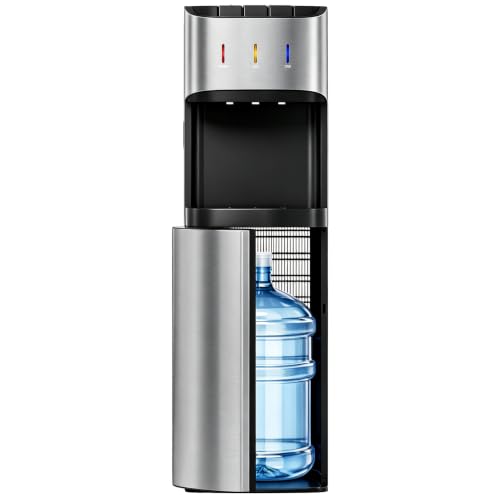
Manastin
Manastin Bottom Loading Water Cooler Dispenser, Gloss Silver

Brio
Brio Bottom Loading Water Cooler Dispenser for 5 Gallon Bottles - 3 Temperatures with Hot, Room & Cold Spouts, Child Safety Lock, LED Display with Empty Bottle Alert, Stainless Steel
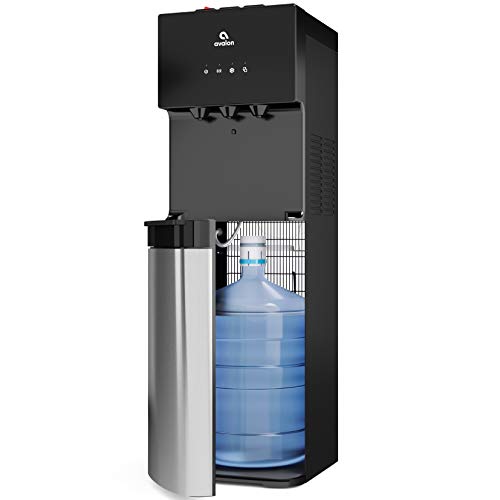
Avalon
Avalon A4BLWTRCLR Bottom Loading Water Cooler Water Dispenser - 3 Temperature Settings - Hot, Cold & Room Water, Durable Stainless Steel Cabinet, Bottom Loading - UL/Energy Star Approved
Prices retrieved from Amazon on 2026-09-29 and may since have changed; the price on Amazon at the time of purchase is the one that applies. As an Amazon Associate we earn from qualifying purchases, at no extra cost to you. No manufacturer pays for a place in this list.
Bottleless (point-of-use) water coolers
Affiliate linksPoint-of-use coolers that connect to a cold water line and filter as they dispense. Check the filter's NSF/ANSI listing.

Brio
Brio Self Cleaning Bottleless Water Cooler Dispenser, UL Approved, Stainless Steel, Point of Use Drinking Water Filter, Hot, Cold, and Room Temperature
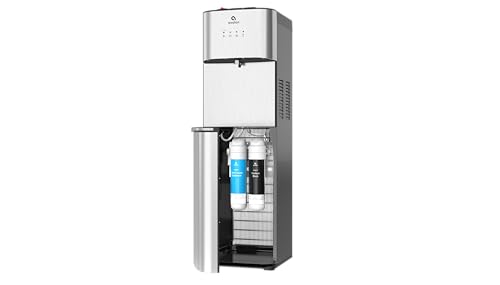
Avalon
Avalon Self Cleaning Bottleless Water Cooler Water Dispenser - 3 Temperature Settings - Hot, Cold & Room Water, Durable Stainless Steel Cabinet, NSF Certified Filter- UL Listed

Brio
Brio Bottleless Water Cooler Dispenser w/ 4-Stage Filters (Included) removes PFAS & Microplastics for Clean Drinking Water, NSF Certified | 3 Temp (Hot, Room, Cold) w/Child Safety Lock & LED Display

EUHOMY
Euhomy Bottleless Water Cooler, NSF-Certified Dual Filters, 3 Temperatures
Prices retrieved from Amazon on 2026-09-29 and may since have changed; the price on Amazon at the time of purchase is the one that applies. As an Amazon Associate we earn from qualifying purchases, at no extra cost to you. No manufacturer pays for a place in this list.