Four ways to do it
| Option | Cups a day it suits | Cost per cup | Upkeep |
|---|---|---|---|
| Pod / single-serve | Up to about 15 to 25 | Highest per cup | Low; descale, empty the pod bin |
| Batch brewer (pour-over or plumbed) | 20 to 100+ | Lowest per cup | Low; clean the basket and server daily |
| Bean-to-cup | 30 to 150+, model dependent | Low to mid | Daily rinse and milk clean, periodic service |
| Office coffee service (OCS) | Any size | Bundled into supplies | Handled by the provider |
The cup counts are rough guides. A busy office of 20 can drink more than a quiet office of 50, so count cups, not heads.
Pod and single-serve brewers
Each cup is fresh, there is no stale pot, and nobody has to learn anything. The trade is price: pods cost several times as much per cup as ground coffee, and a machine that brews one cup in about a minute builds a queue at 9 a.m. Commercial single-serve models have larger reservoirs or a direct water line, and are built for more cycles than the home versions sold beside them. Pod waste is the other complaint; recyclable and compostable pods exist, but check what your local hauler accepts.
Batch brewers
A batch brewer makes a half gallon or more at a time into an airpot, thermal server or glass decanter. It is the cheapest coffee per cup by a wide margin and the right answer for meetings and for offices that drink a lot of plain coffee. Pour-over models are filled by hand; plumbed models connect to a cold water line and need a plumber. Thermal servers keep coffee hot without a warming plate, so it does not scorch after half an hour.
Bean-to-cup machines
These grind whole beans for each drink and can make espresso, lattes and cappuccinos at the push of a button. Staff like them, and per-cup cost sits between batch coffee and pods. They cost the most to buy or rent, and they need daily care: rinse cycles, emptying the grounds drawer, and cleaning the milk system every day if it uses fresh milk. Most need a water line or a large tank and a drain or drip tray. Ask how service is handled before you choose one, because a broken bean-to-cup machine leaves the office with no coffee at all.
Office coffee service (OCS)
An OCS provider supplies the brewer, delivers coffee, cups, creamer and sugar on a schedule, and handles cleaning and repairs. The machine is often "free on loan" in exchange for buying supplies from the provider at their prices, sometimes with a monthly minimum.
OCS suits offices that want no one on staff owning the job. The cost of the machine is recovered through supply prices, so compare the per-cup price of the pods or packs against buying the same coffee yourself.
The specifications that matter
- Brew capacity per hour. Match it to the morning peak, not the daily total.
- Water supply. A reservoir needs filling; a plumbed machine needs a cold water line with a shut-off valve, and local code may require a backflow preventer. Budget for the plumber.
- Electrical. Commercial batch and bean-to-cup brewers can draw more power than a shared breakroom circuit carries alongside a microwave and a kettle. Many run on a standard 120 V outlet, but some larger models need a dedicated circuit or 208/240 V. Check the plate before you buy.
- Water filtration. Scale is the most common cause of brewer failure. A filter on the supply line, or regular descaling, protects the heater. Hard water areas need it most.
- Commercial listing. For a machine in a food service setting, look for an NSF or equivalent listing and a UL or ETL safety mark. For a plain office breakroom, the safety mark is the one that matters.
- Standby energy. Machines that keep a boiler hot all night use power doing nothing. An auto-off or eco timer helps.
The costs people miss
- Cups, lids, stirrers, creamer and sugar. In some offices they cost almost as much as the coffee.
- Filters for the water line, descaling solution and cleaning tablets.
- Plumbing a water line and drain, if the machine needs one.
- Repairs outside warranty. Bean-to-cup machines are the most expensive to fix.
- Staff time spent cleaning, restocking and dealing with a broken machine.
Tea, hot water and cold drinks
If people also want tea or instant soup, a hot water tap on the brewer or a separate hot and cold water cooler saves the kettle queue. For cold drinks and snacks, see the vending machine guide, and for iced drinks, the ice machine guide. Our coffee brewer register lists certified commercial brewers.
Before you buy
- Count cups at the busiest hour and across a normal day for a week.
- Decide who will clean the machine every day, by name.
- Check the power outlet, circuit and water supply where the machine will sit.
- Price a cup: coffee, milk and cup together, for each option.
- For OCS, get the contract in writing and read the renewal, minimum and exclusivity clauses.
- Ask about service response time and a loaner machine if yours breaks.
Commercial batch coffee brewers
Affiliate linksBatch brewers that brew into airpots or thermal servers. They give the lowest cost per cup for busy offices and meetings.

NUPANT
NUPANT Commercial Airpot Coffee Brewer 2.2L/74oz Dirp Coffee Maker with 24H Insulated Thermal Carafe Stainless Steel Pour Over Coffee Machine 120V/1450W COFFEE Dispenser for Café Restaurant Cafateria
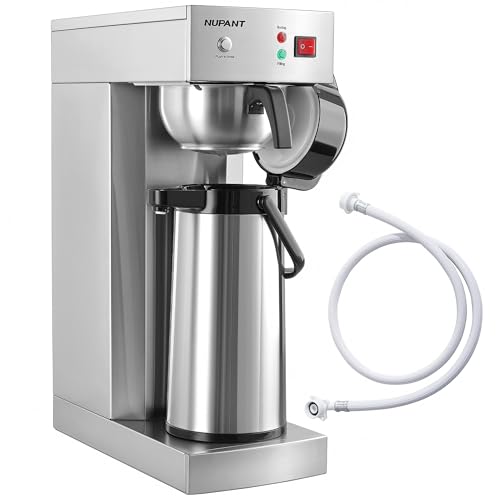
NUPANT
NUPANT Auto-Filling Commercial Airpot Coffee Brewer 2.2L/74oz Dirp Coffee Maker Machine with 24 Hours Hot Thermal Carafe Stainless Steel Pour Over Coffee Dispenser 120V/1450W for Restaurant Office
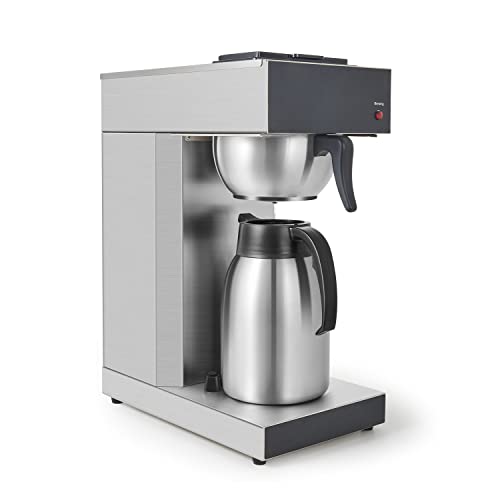
SYBO
SYBO 12-Cup Commercial Coffee Maker with 74oz Thermal Carafe

NUPANT
NUPANT Commercial Airpot Coffee Brewer 14 Cup Auto-Fill Dirp Coffee Maker Machine with 74oz 24H Thermal Carafe, Stainless Steel, Hot Water Dispenser,Temp./Cup Control LCD Screen for Restaurant Office
Prices retrieved from Amazon on 2026-09-29 and may since have changed; the price on Amazon at the time of purchase is the one that applies. As an Amazon Associate we earn from qualifying purchases, at no extra cost to you. No manufacturer pays for a place in this list.
Commercial single-serve brewers
Affiliate linksSingle-serve brewers built for office use, with large reservoirs or a direct water line.

Keurig
Keurig K-3550 Large Business Single Serve Coffee Maker, Plumbed, Silver/Black

Keurig
Keurig K-2500 Single Serve Commercial Coffee Maker

Keurig
Keurig K-2550 Medium Business Single Serve Coffee Maker, Plumbed, Silver/Black

Keurig
Keurig K-3500 Single Serve Commercial Coffee Maker
Prices retrieved from Amazon on 2026-09-29 and may since have changed; the price on Amazon at the time of purchase is the one that applies. As an Amazon Associate we earn from qualifying purchases, at no extra cost to you. No manufacturer pays for a place in this list.