FDM or resin
FDM (fused deposition modeling, also called FFF) printers push plastic filament through a hot nozzle. They are the default for functional parts: cheap to run, forgiving, and able to print in tough engineering plastics. Resin printers (SLA, or the cheaper masked LCD type often sold as MSLA) cure a vat of liquid resin with light. They produce far finer detail and smoother surfaces, but the workflow is wet and chemical.
| FDM (filament) | Resin (SLA / MSLA) | |
|---|---|---|
| Build method | Melts plastic filament and lays it down in layers | Cures liquid photopolymer resin with UV light, layer by layer |
| Surface finish | Visible layer lines | Smooth; fine detail and small text hold up |
| Part strength | Good, and engineering filaments are available | Standard resins are brittle; tough and engineering resins cost more |
| Post-processing | Remove supports; little else | Wash in solvent, UV post-cure, remove supports; gloves throughout |
| Mess and handling | Low; a spool of plastic | Liquid resin, used solvent and contaminated wipes to manage |
| Typical business use | Jigs, fixtures, enclosures, prototypes, spare parts | Dental and jewelry models, detailed prototypes, small precise parts |
For most offices, workshops and small manufacturers, an enclosed FDM printer is the right first machine. Choose resin when the parts are small and detail is the point, and when someone will own the cleanup.
Materials decide the machine
Pick the printer from the materials you need, not the other way round. A printer that handles only PLA is a prototyping tool. One with an enclosure, a hotend that reaches engineering temperatures and a hardened nozzle can make parts that go into service.
| Filament | What it is good for | Needs |
|---|---|---|
| PLA | Easiest to print, low odor. Softens at fairly low temperatures, so not for hot cars or near machinery. | Open frame is fine |
| PETG | Tougher and more heat resistant than PLA, a little stringy. A good default for functional parts. | Open frame is fine |
| ABS / ASA | Heat and impact resistant; ASA also handles sunlight. Warps without a warm, still chamber and gives off styrene. | Enclosure and ventilation |
| TPU | Flexible, rubber-like. Gaskets, bumpers, grips. Prints slowly. | Direct-drive extruder helps |
| Nylon, PC, carbon-filled | Strong engineering parts. Absorb moisture, need high temperatures, and abrasive fills wear brass nozzles. | Enclosure, dry box, hardened nozzle |
Filament absorbs moisture from the air, and wet filament prints badly. Store open spools in a sealed box with desiccant, or use a heated dryer for nylon and similar materials.
Enclosure and ventilation
FDM printing releases ultrafine particles and volatile organic compounds, and the amount depends heavily on the material and temperature. ABS and ASA are the ones to take seriously because of styrene; PLA emits less but not nothing. Resin gives off a noticeable odor and its uncured liquid is a skin irritant and sensitizer.
- Put the printer in its own room or a well-ventilated workshop, not beside desks.
- Choose an enclosed printer if you will print ABS, ASA, nylon or polycarbonate. The enclosure keeps the heat in and the drafts out, and lets you filter or duct the air.
- Filtration: a HEPA filter traps particles and activated carbon adsorbs some of the gases. Ducting the enclosure outdoors is more reliable than a filter alone.
- Resin: nitrile gloves, eye protection, and a plan for used isopropyl alcohol and resin-soaked paper towels. Fully cure waste resin in light before disposal, and follow your local rules for the solvent.
UL 2904 is a published method for testing particle and chemical emissions from 3D printers. A manufacturer that can point to it has at least measured what its machine gives off. Treat the resin and filament safety data sheets as required reading.
The specifications that matter
- Build volume. Measure the largest part you expect to print. Big parts can be split and glued, but it costs time and strength.
- Hotend temperature and nozzle. Engineering materials need higher temperatures; carbon and glass-filled filaments need a hardened steel nozzle.
- Heated bed and auto-leveling. Standard now, and the difference between first layers that stick and a morning of failed prints.
- Multi-material or multi-color. Useful for soluble supports and labeled parts; adds waste and complexity.
- Networking and fleet control. If several people will send jobs, look for a print queue and user access, and check whether the printer depends on a vendor cloud service to work.
Costs people miss
- Spare nozzles, build plates and belts. Consumables wear on a machine that runs daily.
- Resin printers use FEP or similar vat films and eventually LCD screens; both are replacement parts.
- Failed prints. Budget material for them, especially while people are learning.
- Staff time for slicing, removing supports and finishing. The printer is fast; the person is the bottleneck.
- A filter, enclosure or duct if the printer did not come with one.
Rules that apply
No US rule is written for office 3D printers, but OSHA's general duty to provide a safe workplace and its hazard communication standard apply to the chemicals in resin and solvent: keep the safety data sheets where staff can reach them and train the people who handle them. Printing replacement parts for a product you sell, or copying someone else's design, raises product-liability and intellectual-property questions to take to a lawyer.
For related workshop equipment, see laser engravers and cutters, which share most of the ventilation questions. For a printer that makes paper rather than parts, the ENERGY STAR printer register lists certified models.
Before you buy
- List the parts you will print and the materials they need.
- Choose FDM unless fine detail on small parts is the main job.
- Decide where it will live, and plan ventilation or filtration for that room.
- Buy an enclosed model if ABS, ASA, nylon or polycarbonate is on the list.
- Check that it works without a vendor cloud account if that matters to your IT policy.
- Price a year of filament or resin, nozzles, plates and films, not the printer alone.
- Print the safety data sheets and name the person responsible for the machine.
Enclosed 3D printers
Affiliate linksEnclosed FDM printers keep heat in for ABS and ASA and make it easier to filter or duct the air.
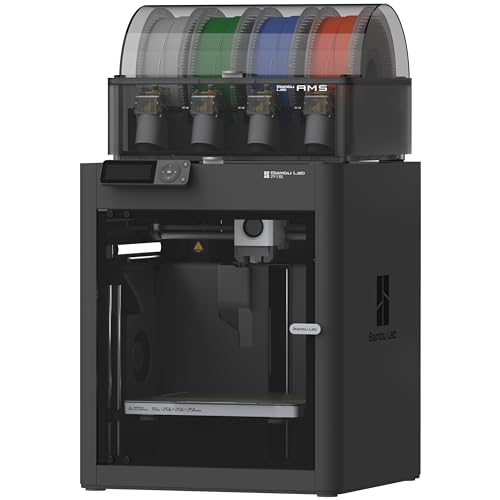
BAMBULAB
Bambu Lab P1S Combo, P1S 3D Printer and AMS, Multi-Color 3D Printing

BAMBULAB
Bambu Lab P1S 3D Printer, Ready-to-Use FDM 3D Printer

FLASHFORGE
FLASHFORGE Adventurer 5M Pro 3D Printer with 1 Click Auto Printing System

ORIGINAL PRUSA
Original Prusa CORE One+ Fully Enclosed High-Speed CoreXY 3D Printer
Prices retrieved from Amazon on 2026-09-29 and may since have changed; the price on Amazon at the time of purchase is the one that applies. As an Amazon Associate we earn from qualifying purchases, at no extra cost to you. No manufacturer pays for a place in this list.
PLA and PETG filament
Affiliate links1.75 mm spools of the two everyday materials. Store open spools sealed with desiccant.

ELEGOO
ELEGOO PETG 3D Printer Filament 1.75mm Black 1KG

UJOY3D
UJOY3D 10kg PETG 3D Printer Filament Bundle Multicolor, Rapid Strong PETG Filament 1.75mm, 1kg Spool, 10 Pack (Black+Jade White+Grey+Red+Cobalt Blue+Christmas Green+Orange+Yellow+Iris Purple+Pink)

EONO3D
EONO3D Black PETG Filament 1.75mm 1kg (2.2lb), 3D Printer Filament

Polymaker
Polymaker PETG Filament 1.75mm, 1KG, Black
Prices retrieved from Amazon on 2026-09-29 and may since have changed; the price on Amazon at the time of purchase is the one that applies. As an Amazon Associate we earn from qualifying purchases, at no extra cost to you. No manufacturer pays for a place in this list.
Filament dryers
Affiliate linksHeated dry boxes for moisture-sensitive filaments such as nylon and PETG.

Comgrow
Comgrow 3D Printer Filament Dryer Box, SH01 Filament Storage, 3D Printer Spool Holder Filament Dehydrator Keeping Filaments Dry During 3D Printing, Compatible with 1.75mm/2.85mm PLA PETG ABS Materials

SUNLU
SUNLU Filament Dryer Box 2026 New Upgrade S1 Plus, Black

Creality
Creality 2026 New Upgrade Filament Dryer Box Pro, Space Pi SE with High PTC Efficiency & Precision Sensor for 1KG Spools 45~65℃, 3D Printer Filament Dehydrator for PLA PETG ABS ASA TPU

Creality
Creality Filament Dryer Box 4 Spools, Space Pi X4 Filament Storage Box, 200W PTC Heats Up to 85°C, Dual Heating Chambers, Fast Drying & Moisture-Free Storage, for PLA, PETG, TPU, ABS
Prices retrieved from Amazon on 2026-09-29 and may since have changed; the price on Amazon at the time of purchase is the one that applies. As an Amazon Associate we earn from qualifying purchases, at no extra cost to you. No manufacturer pays for a place in this list.