Burglary ratings
UL tests burglary resistance under UL 687. A tool-resistant rating such as TL-15 or TL-30 means trained testers with hand tools, power tools and pressure-applying devices could not open the door within that many minutes of net working time. The base rating covers the door face; an "x6" suffix, as in TL-30x6, means all six sides were tested.
| Rating | What it means | Typical use |
|---|---|---|
| B-rate | Construction description: thin steel body and door, no attack test | Deters casual theft only |
| C-rate | Construction description: thicker steel body and door, no attack test | Moderate cash, some insurers accept it |
| UL RSC | Residential Security Container, tested under UL 1037: resists a short attack with common tools | Home and light office use |
| UL TL-15 | Door resists attack with hand and power tools for 15 minutes of working time | Retail cash, jewelry, pharmacies |
| UL TL-30 | As TL-15, for 30 minutes | Higher cash and valuables limits |
| UL TRTL-30 | Resists tools and cutting torches for 30 minutes | High-value stock |
B-rate and C-rate are insurance-industry descriptions of steel thickness, not tests. A safe sold only as "heavy duty" or "commercial grade" with no UL label has no independent burglary rating.
Fire ratings
UL 72 tests fire resistance. The class is the highest temperature the inside may reach during the test, and the rating adds a duration, such as 1 hour or 2 hours. Paper chars at a much higher temperature than digital media can survive, so the classes differ:
| UL 72 class | Maximum inside temperature | Protects |
|---|---|---|
| Class 350 | 350 °F | Paper documents |
| Class 150 | 150 °F | Film, photographs and magnetic tape |
| Class 125 | 125 °F | Digital media: hard drives, flash drives, disks |
A Class 350 safe will keep paper legible but will not protect backup drives; heat and humidity inside can ruin them. For media, buy a Class 125 safe, or a Class 125 media box that sits inside a larger fire safe. Some UL 72 ratings also include an impact test, in which the hot safe is dropped to simulate falling through a burning floor.
Fire ratings from other test bodies exist, and some safes carry only a manufacturer's own claim. A manufacturer claim is not a UL rating.
Types of business safe
- Deposit or drop safes have a slot, drawer or rotary chute so staff can drop cash during a shift without being able to open the safe. They are the standard defense against till theft and robbery at the counter. Pair them with a policy of keeping little cash in the register.
- Cash management safes hold a locked upper compartment for a manager and a drop compartment below, sometimes with a time delay lock.
- Composite safes combine a burglary rating and a fire rating in one unit. Check both ratings on the label.
- Fire-resistant filing cabinets protect working files in a fire but offer little burglary resistance.
- Key cabinets and pharmacy safes for keys and controlled substances. Pharmacies should check DEA and state requirements for controlled-substance storage.
Locks
Mechanical dial locks last for decades and need no batteries. Electronic keypads are faster to open, can hold several user codes and an audit trail on better models, and some add time delay or dual control (two people must be present to open it). Change codes whenever someone who knew them leaves.
Anchoring and placement
An unanchored small safe can be carried out whole and opened elsewhere. Bolt it to a concrete floor using the pre-drilled holes and the maker's anchor kit. Place it out of sight of customers and away from exterior walls where possible. A fire safe on an upper floor should have an impact rating if it may fall. Floors have load limits, so check before installing a heavy safe above ground level.
Insurance
Commercial crime and property policies often limit how much cash is covered overnight, and the limit usually depends on the safe's rating and whether an alarm protects it. Ask your insurer or broker what rating they require for the amount you hold before you buy, not after a loss.
Before you buy
- Decide whether you need burglary protection, fire protection, or both.
- Ask your insurer which rating covers the cash and valuables you hold.
- Look for the UL label: UL 687 for burglary, UL 72 for fire.
- Use Class 350 for paper and Class 125 for drives and other digital media.
- Choose a drop or deposit safe if cash leaves the till during a shift.
- Plan to anchor it, and check the floor can carry the weight.
- Choose a lock type, and set a routine for changing codes.
Related: money counters, coin counters, access control and security cameras.
UL fire-rated safes
Affiliate linksLook for a UL 72 label: Class 350 for paper, Class 125 for drives and digital media.

PHOENIX SAFE
Phoenix Safe Class 350 Digital Fireproof Safe, 1.75 cubic feet

FireKing
FireKing SureSeal Fire Rated Safe with Key Lock, Taupe

HOLOJOY
HOLOJOY 65LB UL Fire Rated 2-Hour Heavy Duty Fireproof Security Safe 17.7"H

XPEDITION
Fireproof Document Box with Key Lock - Large Portable Fire Safe for Home Documents - Waterproof & Fire Resistant Lock Box with Ergonomic Handle, 1 Hour at 1700°F, 72 Hours Waterproof
Prices retrieved from Amazon on 2026-09-29 and may since have changed; the price on Amazon at the time of purchase is the one that applies. As an Amazon Associate we earn from qualifying purchases, at no extra cost to you. No manufacturer pays for a place in this list.
Drop and depository safes
Affiliate linksDeposit safes with a drop slot or chute let staff remove cash from the till during a shift.
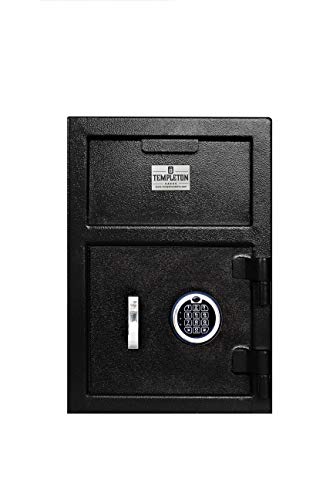
Templeton Safes
Templeton Safes T862 Depository Drop Safe, Multi-User Keypad, 1.12 CBF

Mesa Safe Co.
Mesa Safe MESA MFL2014E-OLK All Steel Depository Safe with Outer Locker, with Electronic Lock, 1.5-Cubic Foot, Black and Grey Black/Grey

Greenvelly
Greenvelly 80LBS Depository Safe with Drop Slot, 2.6 Cub Anti-Theft Cash Drop Safe with Electronic Lock for Home,Office,Hotel (2 Keys)

Thmosz
5.6 Cuft Large Depository Drop Safe for Business
Prices retrieved from Amazon on 2026-09-29 and may since have changed; the price on Amazon at the time of purchase is the one that applies. As an Amazon Associate we earn from qualifying purchases, at no extra cost to you. No manufacturer pays for a place in this list.