Four ways to count coin
| Type | How it works | Suits |
|---|---|---|
| Manual coin tray or sorter | Hand-sorted trays that measure coins into roll-sized stacks | Occasional counts, one till |
| Electric coin sorter | Mixed coins in, sorted into tubes or wrappers by denomination | Retail tills, laundromats, parking, churches |
| Single-denomination counter | Counts and batches one coin type at high speed | Vending, arcades and any business that pre-sorts |
| Counting scale | Weighs a pile of one denomination, or a whole till, and converts to a value | Fast till counts and cash-office reconciliation |
Most small retailers need a mixed-coin sorter. Businesses whose machines collect a single coin type, such as vending, car washes and older laundromats, get more from a fast single-denomination counter. A counting scale is the quickest way to count a till drawer that is already split into compartments, and many also count bills.
When a counting scale is the better buy
A counting scale does not sort. It weighs coins you have already separated, or the coin cups of a till tray, and converts weight to value using the known weight of each coin. Counting a full drawer takes a minute or two, so a scale is the usual choice for shift changes in a store with several registers. Scales are quiet and have no coin path to jam. The trade-off is that they trust the weight: a mixed cup, a wrapped roll with the wrong coin in it, or a heavy foreign coin will throw off the total. Many models also count bills by weight and print or export a till report, so check whether you need that before paying for it.
Start with the bank
Coin deposit rules vary from bank to bank and branch to branch. Before buying anything, ask yours:
- Does it accept loose coin, and is there a counting fee?
- Does it want coin in paper rolls, in bags of a set value, or in plastic deposit bags?
- Does it require its own branded wrappers or bags, or your account number printed on them?
- Is there a limit per deposit, or a separate cash vault service for larger volumes?
If the bank counts loose coin free, a sorter that simply verifies the total may be all you need. If it wants rolls, a machine that fills wrappers directly will save the most labor.
Standard US coin rolls
| Coin | Coins per roll | Roll value |
|---|---|---|
| Pennies | 50 | $0.50 |
| Nickels | 40 | $2.00 |
| Dimes | 50 | $5.00 |
| Quarters | 40 | $10.00 |
Sorters that fill wrappers stop each tube at the standard count. Check the sorter supports the wrapper type you buy: flat paper wrappers, preformed tubes, or crimped rolls.
Specifications that matter
- Speed in coins per minute. Desktop sorters are slower than commercial single-denomination counters. Speed matters less than hopper size if you count once a day.
- Hopper capacity, the number of coins you can pour in at once. A small hopper means standing over the machine.
- Batching and totals. A display that shows the value of each denomination and the total, and stops at a preset count for bagging.
- Jam handling. Bent coins, tokens, foreign coins and debris jam sorters. Look for easy access to the coin path and a reject cup for off-size coins.
- Dollar coins. Many desktop sorters handle pennies to quarters only. Check if you take dollar or half-dollar coins.
- Noise. Coin machines are loud. Count away from customers.
Around the cash office
Coin counters pair with a bill counter for the notes, and a safe to hold counted cash until the bank run. The totals should match the register's Z report or your POS end-of-day report. Count with two people present when you can, and record who counted and when.
Costs people miss
- Wrappers and bags. A sorter that fills wrappers uses them fast, and branded bank bags may come only from the bank.
- Bank coin fees. Some banks charge per deposit or per bag for coin, or charge to order rolled coin back for your tills. Recycling the coin you take in as change reduces both.
- Cleaning. Coin dust and grime build up in the coin path and cause miscounts. Budget a few minutes a week with a brush or the maker's cleaning cards.
- Armored pickup. Businesses with large coin volumes often use an armored carrier or a bank cash vault. Coin is heavy, and carrying it to a branch costs staff time and carries risk.
Before you buy
- Ask your bank how it wants coin deposited, and whether it charges to count loose coin.
- Decide between a mixed-coin sorter, a single-denomination counter and a counting scale.
- Check which denominations the machine handles, including dollar coins.
- Check the wrapper or bag type it fills, and keep a stock.
- Choose hopper size for how much you count in one sitting.
- Put the machine where the noise and the cash are out of sight.
Coin sorters and counters
Affiliate linksElectric sorters that count mixed US coins into tubes or wrappers, with a running total.

Beam Technology
Electric Coin Sorter, 1 Row with Value Counting, Patented Anti-Jam Technology

Cassida
Cassida C300 Professional USD Coin Counter, Sorter and Wrapper/Roller, 300 Coins/min, with Quickload and Printing-Compatible, Gray
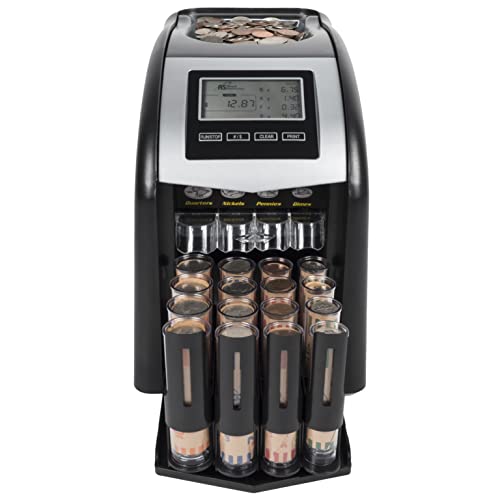
Royal Sovereign
Royal Sovereign 4 Row Electric Coin Counter/Sorter with Patented Anti-Jam Technology & Digital Counting Display (FS-44N), Black

Aifieego
Aifieego Coin Counter Sorter Wrapper Machine, Counting Wrapping US Change
Prices retrieved from Amazon on 2026-09-29 and may since have changed; the price on Amazon at the time of purchase is the one that applies. As an Amazon Associate we earn from qualifying purchases, at no extra cost to you. No manufacturer pays for a place in this list.
Coin wrappers
Affiliate linksStandard US coin wrappers and preformed tubes. Check the type your sorter fills.

LLIKED
LLIKED 128 Assorted Preformed Coin Wrappers Quarters Pennies Nickels Dimes

Carphone Warehouse
100pcs Assorted Heavy Duty Preformed Coin Wrappers Rolls - Quarters, Pennies, Nickels and Dimes (Total 100 pcs)

LLIKED
LLIKED 256 Assorted Preformed Coin Wrappers Quarters Pennies Nickels Dimes

LLIKED
LLIKED 64 Assorted Preformed Coin Wrappers, Quarters, Pennies, Nickels and Dimes (64 Assorted)
Prices retrieved from Amazon on 2026-09-29 and may since have changed; the price on Amazon at the time of purchase is the one that applies. As an Amazon Associate we earn from qualifying purchases, at no extra cost to you. No manufacturer pays for a place in this list.