Boundary wire or RTK GPS
| Method | How it works | Strengths | Weaknesses |
|---|---|---|---|
| Boundary wire | A wire buried or pegged around the edge and islands | Works under trees and near buildings; no satellite dependence | Installation labor; wire breaks; changing zones means moving wire |
| RTK GPS (GNSS) | Satellite positioning corrected by a base station or a correction network | No wire; zones drawn in an app; easy to change | Needs open sky; accuracy drops under trees and beside tall buildings |
| Vision and sensor fusion | Cameras, sometimes combined with RTK, find the edge of the lawn | Little setup; handles shaded areas better than RTK alone | Newer; performance depends on lighting and grass edges |
Wire remains the dependable choice for shaded, tree-lined or tightly built sites. Budget for the installation labor, and expect to repair breaks after aeration, edging or trenching work.
RTK has taken over most new commercial installs on open grounds. A base station, or a subscription to a correction network, sharpens GPS to within a few centimeters in good conditions. Walk the site with the installer: the areas next to tall buildings or under dense canopy are where RTK mowers lose their position and stop.
The specifications that matter
- Rated area. The maximum area a single mower covers at the manufacturer's assumed hours. Growth in spring and wet weather cuts the real figure, so size with a margin.
- Slope rating. Given in percent. Check the steepest part of the site, including banks and ditch edges, not the average.
- Cutting width and height range. Commercial and sports turf models cover wider swaths and lower cut heights.
- Passage width. The narrowest corridor the mower can travel between two zones.
- Weather and night running. Rain sensors, frost pausing, and whether it can run overnight when the grounds are empty.
- Fleet management. Commercial models offer a web dashboard for many mowers across many sites, with schedules, alerts and service data. Check the fee for it.
Theft, vandalism and public spaces
A mower working on open, public-facing grounds needs protection: a PIN code, an alarm when lifted, GPS tracking through a cellular connection, and a mower that will not work away from its registered site. Many commercial buyers place the charging station somewhere less visible or fenced.
Robotic mowers stop their blades when lifted or tilted and are built to a product safety standard for robotic lawnmowers (IEC 60335-2-107 and its national versions). Even so, schedule mowing for times when the grounds are quiet, keep children and pets in mind, and post signage in public areas. Tell your liability insurer about the fleet. For general principles, see robot safety.
Costs people miss
- Installation: wire laying, or RTK base station siting, plus zone mapping.
- Charging stations need power outdoors, and sometimes trenching for a cable.
- Blades are small and wear quickly; they are cheap but need replacing often.
- Cellular or connectivity subscriptions for tracking and fleet software.
- Batteries lose capacity over a few seasons.
- Winter storage and servicing where the season ends.
Commercial fleets are often sold through outdoor power equipment dealers, and some are offered on a monthly basis with installation and servicing included. Read robots as a service for the terms to check. Browse other models in the service robot directory.
Small sites
For a single storefront lawn or a small office yard, a residential robotic mower is often enough. Choose one rated well above your lawn area, with the slope rating you need, anti-theft features and an app you will use.
Robotic lawn mowers
Affiliate linksFor a storefront lawn or small office grounds, a robotic mower rated well above your area and slope is often enough. Check anti-theft features and whether it uses a wire or RTK GPS.
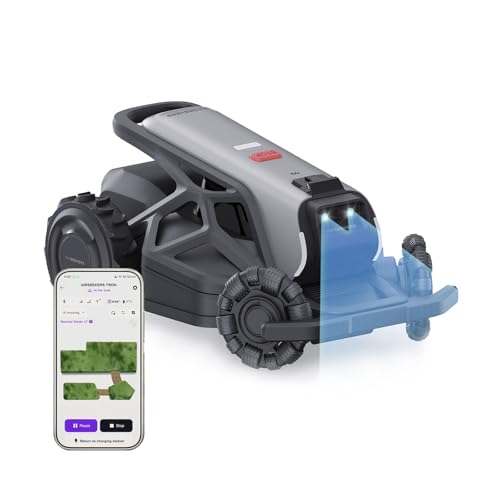
AirSeekers
AIRSEEKERS TRON SE Robot Lawn Mower Wire Free,Lawn Mower Reception 0.37 Acre,Antenna-Free NRTK+AI Vision,65% Slope 140° Obstacle Detection,80 Multi-Zone Management,Customized Mowing, IPX6,10Ah

NAVIMOW
Segway Navimow i105N Robot Lawn Mower Perimeter Wire Free 1/8 Acre RTK+Vision Robotic Lawnmower, AI-Assisted Mapping, Virtual Boundary, APP Control, 58dB(A) Quiet, Multi-Zone Management
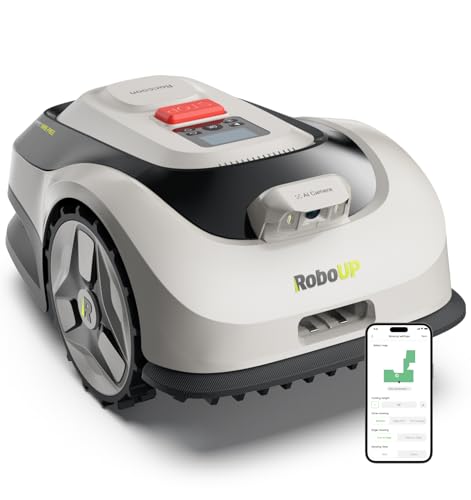
RoboUP
Raccoon 2 SE Robot Lawn Mower, Wire-Free Robotic Lawn Mower Without RTK for Max. 0.15 Acre Lawn Area, 1.18" - 3.15” Cutting Height, with AI Obstacle Avoidance, 5Ah Fast-Charging Battery for Small Lawns
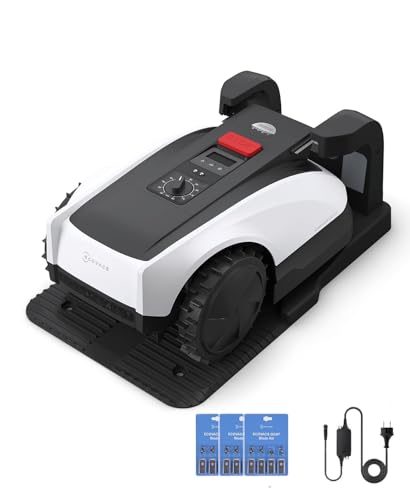
ECOVACS
ECOVACS Goat O1000 RTK Care Robot Lawn Mower, RTK Navigation, 1/4 Acre
Prices retrieved from Amazon on 2026-09-29 and may since have changed; the price on Amazon at the time of purchase is the one that applies. As an Amazon Associate we earn from qualifying purchases, at no extra cost to you. No manufacturer pays for a place in this list.
Before you buy
- Measure the mowing area and the steepest slope.
- Walk the site for tree cover and tall buildings before choosing RTK over wire.
- Size with margin over the rated area for peak growth.
- Plan charging station locations with power and security in mind.
- Require anti-theft features: PIN, lift alarm and GPS tracking.
- Check fleet software and connectivity fees.
- Agree who handles installation, repairs and winter service.
- Tell your insurer and post signage on public grounds.