The plate
| Plate | Character | Suits |
|---|---|---|
| Polished steel | Durable, forgiving, needs seasoning | General use, burgers, breakfast |
| Chrome-plated | Radiates less heat, cleans easily, avoids flavor transfer | Mixed menus, eggs to fish, hot kitchens |
| Composite or clad | Layers that spread heat evenly | Consistent temperature across the plate |
| Cast iron | Holds heat, heavy, slow to change temperature | Smaller countertop units |
Thickness matters as much as material. A thicker plate, often around 3/4 inch on restaurant units against 1/2 inch on lighter ones, holds more heat and recovers better when a row of frozen patties goes down, but takes longer to heat up. Thin plates respond faster and suit light, varied cooking.
Chrome plates cost more and need care: scrapers and harsh cleaners can damage the chrome, and once damaged it cannot be seasoned like steel. Their lower radiant heat makes the line more comfortable for cooks, and they clean up quickly between foods.
Thermostatic or manual
- Manual controls set burner or element output, like a range knob. Cheaper and simple, they suit experienced cooks who read the plate. Temperature drifts as load changes.
- Thermostatic controls hold a set temperature in each zone. They cost more but give consistent results with less-experienced staff, cut energy at idle, and make it easy to run eggs in one zone and burgers in another.
Controls usually come in zones, each covering roughly a foot of plate width. More zones mean more flexibility. Some newer griddles add grooved sections, two-sided (clamshell) platens that cook both sides at once, or programmable controls for chains.
Gas or electric
Gas griddles are the usual US restaurant choice where gas is already on the line. Electric griddles tend to heat more evenly and waste less heat into the room, and they suit sites without gas. Size the gas line or electrical circuit before ordering: a wide griddle on a full line may need more gas than the existing supply provides.
Size, mounting and layout
- Width. Commonly 24, 36, 48 or 60 inches, and larger. Count what must be on the plate at once at the peak, not the average.
- Countertop or floor model. Countertop units go on an equipment stand or refrigerated chef base. A chef base below keeps proteins at hand.
- Grease handling. Look for wide grease troughs and large drawers that slide out without spilling.
- Splash guards. Side and back guards protect adjacent equipment and walls.
Hood and fire code
Griddles produce grease vapor, so commercial fire and mechanical codes generally require them to sit under a grease exhaust hood covered by the kitchen fire suppression system. If you add, remove or move a griddle, the suppression nozzles may need to move too; call the contractor who services your system first.
Care
Scrape the plate through service, clean it at the end of the day with the manufacturer's approved cleaner, and re-season steel plates as needed. Warping usually comes from shocking a hot plate with cold water or running one zone very hot while the rest sits cold for long periods. Follow the manual.
Idle time is where the energy goes
Griddles often sit hot for hours between rushes. Thermostatic units cut back at idle; manual units burn at the setting the cook left. Turning off unused zones during slow periods saves fuel and keeps heat off the line. Some models add standby or setback modes that drop the plate temperature until a cook needs it again.
Energy and rebates
ENERGY STAR certifies commercial griddles that are more efficient and hold temperature more evenly. Certified models often qualify for rebates from gas or electric utilities; check with your local utility before you buy. Compare certified models in our griddle register.
The costs people miss
- An equipment stand or refrigerated chef base.
- Gas line or electrical capacity.
- Moving fire suppression nozzles.
- Scrapers, screens and cleaner suited to the plate.
- Chrome plate damage from the wrong tools.
Related: commercial fryers and restaurant equipment leasing.
Before you buy
- Choose the plate material for your menu and cleaning routine.
- Choose thermostatic controls unless cooks are experienced.
- Size width from the peak load on the plate.
- Pick gas or electric by what the line already has and utility rates.
- Confirm hood coverage and suppression nozzle placement.
- Ask your utility about ENERGY STAR rebates.
Griddle scrapers
Affiliate linksCommercial griddle scrapers and screens. Use only the tools the maker approves on chrome plates.

HUOYANSHE
HUOYANSHE Grill Scraper Heavy Duty Griddle Scraper Set with Replacement Blades Flat Top Grill Accessories Griddle Cleaning Kit for Restaurants,Diners, Outdoor Grill Cleaning

HUOYANSHE
Professional Heavy Duty Grill Scraper for Flat Tops with Stainless Steel Scraper Blade, Flat Top Scraper for Griddle with Ergonomic Aluminum Handle, Ideal for Griddle, Outdoor Grill Cleaning
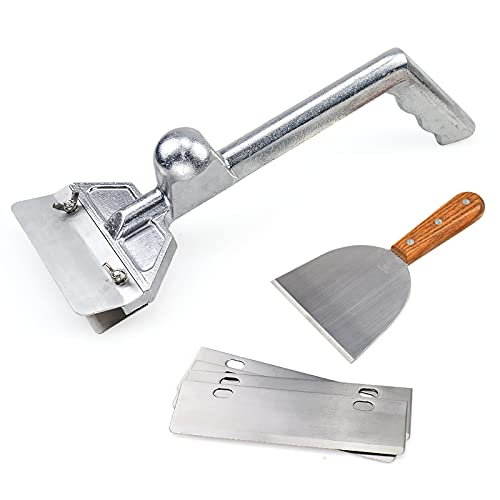
SHANGPEIXUAN
SHANGPEIXUAN Grill Scrapers, Heavy Duty Casting Aluminum Commercial Griddle Scraper with 5 Blades and Small Slant Edge Grill Scraper
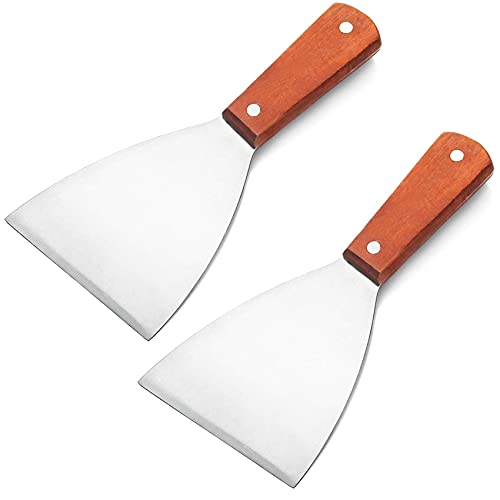
Acronde
Acronde 2PCS Stainless Steel Slant Grill Griddle Spatula Scraper
Prices retrieved from Amazon on 2026-09-29 and may since have changed; the price on Amazon at the time of purchase is the one that applies. As an Amazon Associate we earn from qualifying purchases, at no extra cost to you. No manufacturer pays for a place in this list.