Pick the cabinet by where the food is used
| Type | Form | Typical use |
|---|---|---|
| Reach-in | One, two or three sections, upright, full height | Main back-of-house storage |
| Undercounter and worktop | Counter height, drawers or doors | Storage at the station where food is used |
| Prep table (sandwich or pizza) | Refrigerated rail of pans above a cabinet | Assembly lines, sandwich and pizza shops |
| Glass-door merchandiser | Upright, lit, designed for customers to open | Bottled drinks and grab-and-go |
| Roll-in and pass-through | Doors on both sides or room for a rack cart | High-volume kitchens, banquets |
| Walk-in cooler | Insulated box with separate refrigeration system | Bulk storage once reach-ins run out |
The usual mistake is buying storage in one place and working in another. A line cook who walks to a reach-in across the kitchen forty times a shift wastes labor and holds the door open longer. Put undercounter or prep-table refrigeration at each station and keep the reach-ins for bulk stock. When reach-ins stop keeping up, the next step is usually a walk-in cooler, a building project with its own contractor.
Solid doors or glass
Solid doors insulate better and hide clutter. Glass doors let staff find things without opening the door, and they are required for merchandising, but they gain heat through the glass and usually use more energy. For kitchen storage, choose solid. For anything a customer takes from, choose a merchandiser built for frequent openings and lit shelves. Half doors on a two-section reach-in reduce the cold air lost per opening.
Check the door hinge side against the room layout, and whether the doors are field-reversible. Self-closing doors with a stay-open feature past 90 degrees help on busy lines.
Self-contained or remote condensing
Every refrigerator moves heat out of the cabinet and dumps it at the condenser.
- Self-contained. Compressor and condenser are built into the unit, top-mount or bottom-mount. It plugs in and runs. The heat goes into your kitchen, and the unit works harder when the room is hot. Bottom-mount units put the coil where it is cooler and easy to reach but pick up floor dust and flour; top-mount units keep the coil away from debris but sit in the hottest air.
- Remote condensing. The condensing unit sits on the roof or outside, connected by refrigerant lines. The kitchen stays cooler and quieter. Installation needs a licensed refrigeration contractor and costs more up front. It makes sense for several large units or a walk-in.
Whichever you choose, leave the clearance the manual asks for around the condenser. A self-contained unit shoved into an alcove next to the fryer runs hot, cycles constantly and fails early.
Refrigerants are changing
Under the American Innovation and Manufacturing (AIM) Act, the EPA is phasing down production and import of hydrofluorocarbon (HFC) refrigerants and restricting high global-warming-potential refrigerants in new equipment, sector by sector. In practice, most new self-contained commercial refrigerators now ship with hydrocarbon refrigerants such as R-290 (propane). They are efficient and have very low climate impact.
What that means for a buyer:
- New self-contained units will very likely be R-290. They carry a flammable refrigerant warning label.
- Your service company needs technicians trained and equipped for hydrocarbon refrigerants.
- Older units on phased-down HFCs can still be repaired, but refrigerant for them is likely to get more expensive over time. That shifts the repair-or-replace math on an aging unit toward replacing.
- Remote systems and walk-ins are covered by their own rules; ask the contractor what refrigerant they propose.
Food safety and certification
The FDA Food Code, adopted in some form by most states, requires cold-held food to stay at 41°F or below. Most kitchens set units a few degrees lower to give themselves room when doors open. Inspectors check with a probe thermometer, and every unit needs a thermometer you can read.
Health departments generally expect commercial food equipment to be certified to the relevant NSF/ANSI standard. For refrigerators and freezers that standard is NSF/ANSI 7. A residential refrigerator in a commercial kitchen is a common inspection finding, and it will struggle to hold temperature anyway.
Energy and rebates
Refrigeration runs around the clock, so efficiency pays more here than on almost any other kitchen appliance. Federal standards set minimum efficiency for commercial refrigeration equipment, and ENERGY STAR certifies reach-ins, undercounters and merchandisers that do better. ENERGY STAR commercial food service equipment often qualifies for utility rebates; check with your local electric utility before you buy, since some programs require pre-approval. Compare certified models in our commercial refrigeration register.
The costs people miss
- Delivery through narrow doors: measure every doorway and turn, and check whether doors can come off.
- A dedicated circuit for larger units, and the right plug.
- Casters or legs to meet local rules on cleaning underneath.
- Condenser coil cleaning every few months, especially near fryers and flour.
- Door gaskets: they tear and leak long before the compressor fails.
- Refrigeration contractor time for remote systems.
Related: ice machines, hot holding cabinets, and leasing restaurant equipment.
Before you buy
- Map where cold food is used and put refrigeration at those stations.
- Choose solid doors for storage, glass only where customers or visibility need it.
- Decide self-contained or remote based on kitchen heat and the number of units.
- Confirm NSF/ANSI 7 certification and the refrigerant type.
- Check your service company can work on R-290.
- Measure doorways, clearances and electrical.
- Look up ENERGY STAR rebates with your utility before ordering.
Refrigerator thermometers
Affiliate linksEvery cold-holding unit needs a thermometer staff can read. Inspectors expect 41 F or below.

Rubbermaid Commercial Products
Rubbermaid Commercial Products Fridge/Freezer Monitoring Thermometer

PRECIXE
Precixe 2.5 Inch Stainless Steel Fridge and Freezer Thermometer 2-Pack | NSF Certified | Hanging or Standing for Food Safety
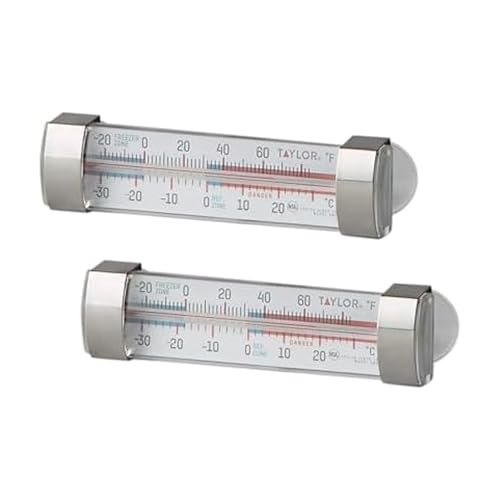
Taylor
Taylor Refrigerator Freezer Tube Thermometer 2-Pack

CDN
CDN Refrigerator/Freezer Thermometer | NSF | Easy-Read Low-Light Dial | -40 to 80°F
Prices retrieved from Amazon on 2026-09-29 and may since have changed; the price on Amazon at the time of purchase is the one that applies. As an Amazon Associate we earn from qualifying purchases, at no extra cost to you. No manufacturer pays for a place in this list.