Four levels of document automation
| Level | What it does | Fits | Limit |
|---|---|---|---|
| OCR | Turns an image of text into text | Searchable PDFs, archives, copy and paste | Built into most scanners and PDF software |
| Template extraction | Pulls fields from fixed positions on a known form | The same form from the same source, every time | Breaks when the layout changes |
| Intelligent document processing (IDP) | Classifies documents and extracts fields by meaning, not position | Invoices, receipts, IDs, forms from many senders | Needs confidence scores and review |
| Language model extraction | Reads a document and answers questions or fills a schema | Contracts, letters, unstructured records | Can state wrong values confidently |
OCR gives you text. It does not know that one number is the invoice total and another is the PO number. If the goal is finding documents later, OCR is all you need, and your scanner software probably already does it.
Intelligent document processing adds the understanding: this is an invoice, this is the vendor, this is the total, these are the line items. It outputs structured data to your accounting, ERP or document system, and it attaches a confidence score to each field. Accounts payable is the most common starting point because the documents are high volume and the fields are well defined.
Choosing a tool
- Start inside software you own. Many accounting, expense and AP platforms include invoice and receipt capture. Use it before buying a separate system.
- Pretrained document types. Invoices, receipts, IDs, bank statements and tax forms are commonly supported out of the box. Custom forms need training on your samples.
- Confidence scores and a review queue. A tool that cannot tell you which fields it is unsure of cannot be run safely at volume.
- Integration. Export to your actual system, with field mapping, not a CSV someone uploads by hand.
- Data handling. Where documents are processed and stored, retention, and whether the vendor trains on your documents.
Measuring accuracy properly
Vendors quote accuracy on their own test sets. Your documents are different: faxed copies, phone photos, handwritten notes, stamps over totals. Measure on yours.
- Pull a sample of real documents from several months and many senders, including the ugly ones. A few hundred is a reasonable pilot.
- Have a person key the correct values for each field you care about.
- Run the tool and score field-level accuracy: of all invoice totals, how many were exactly right. Document-level accuracy (every field right) is the harder and more honest number.
- Check how well the confidence scores work. The fields it marks as sure should almost never be wrong. If they are, the review threshold cannot be trusted.
Where human review belongs
- Any field below the confidence threshold.
- Any document that fails a validation rule.
- High-value items: payments over a set amount, bank detail changes, contract terms.
- A random sample of auto-approved documents every week, to catch drift.
Bank detail changes deserve special care. A changed remittance account on an invoice is a classic fraud pattern, and automation that pays whatever it reads makes that fraud easier. Verify changes by phone, using a number you already have.
The scanner still matters
Extraction accuracy starts with image quality. A document scanner with a reliable automatic document feeder, duplex scanning and 300 dpi output gives the software clean input; a phone photo of a crumpled receipt does not. Compare models in the scanner register, and for mixed paper handling on a multifunction device see the copier register. Check scanners are a separate category with their own bank-approved software; see the check scanner guide.
Retention and the paper
Once a document is captured, decide what happens to the original. Some records must be kept for set periods, and some in original form. Confirm your retention rules with your accountant or lawyer before shredding originals, then dispose of them securely. See our shredder security level guide.
Before you buy
- Pick one document type with high volume and clear fields, usually invoices.
- Check whether your accounting or AP software already includes capture.
- Pilot on your own documents and measure field-level and document-level accuracy.
- Set a confidence threshold and a review queue, plus validation rules.
- Require phone verification for any change of bank details.
- Read the vendor's data retention and training terms.
- Make sure your scanners feed clean 300 dpi images.
Duplex document scanners
Affiliate linksScanners with an automatic document feeder and duplex scanning give document AI clean 300 dpi input to work from.

Epson
Epson Workforce ES-400 II High-Speed Color Duplex Desktop Document Scanner

ScanSnap
ScanSnap iX2500 Wireless or USB High-Speed Document Scanner, Black
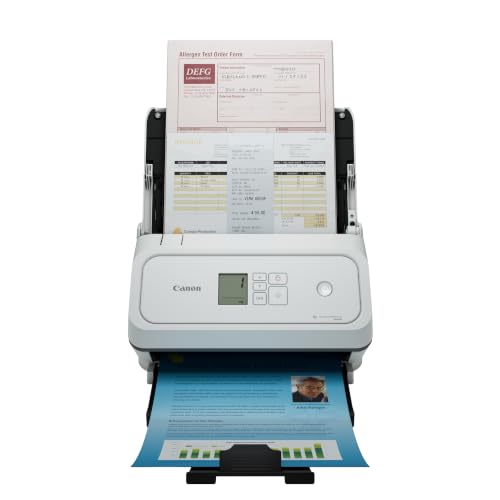
Canon
Canon imageFORMULA R40II Office Document Scanner - Duplex Scanning, Easy Setup, Scans a Wide Variety of Documents, Scans to Cloud
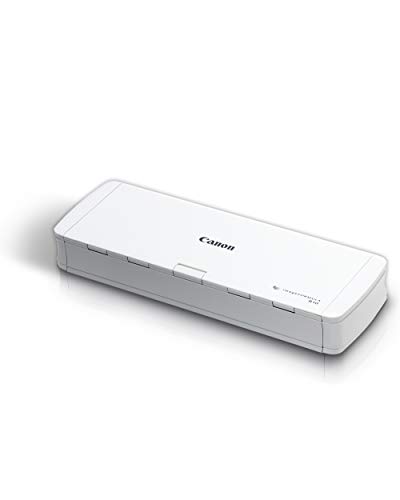
Canon
Canon imageFORMULA R10 - Portable Document Scanner, USB Powered, Duplex Scanning, Document Feeder, Easy Setup, Convenient, Perfect for Mobile Users, White
Prices retrieved from Amazon on 2026-09-29 and may since have changed; the price on Amazon at the time of purchase is the one that applies. As an Amazon Associate we earn from qualifying purchases, at no extra cost to you. No manufacturer pays for a place in this list.