Four kinds of notetaker
| Type | What it is | What to watch |
|---|---|---|
| Built into the meeting platform | Zoom, Teams and Google Meet features | Runs under your existing contract and admin controls |
| Bot that joins the call | A third-party service that appears as a participant | Visible to everyone; can spread by auto-joining invitees' meetings |
| Desktop or phone app | Captures system audio on one person's device | Other participants may not know it is running |
| Hardware recorder | A pocket or desk device for in-person meetings | Nothing on screen tells people they are recorded |
For most businesses the notetaker built into the meeting platform you already pay for is the first choice. It sits under a contract your IT team has already reviewed, and admins can control who turns it on. Third-party bots add features, but each is a new vendor holding recordings of your meetings.
Consent to record
Federal wiretap law and most states allow recording a conversation when one party consents. A group of states require all parties to consent, including California, Florida, Illinois, Maryland, Massachusetts, Pennsylvania and Washington. On a video call with people in several states, the strictest rule in play is the one to meet. The practical standard is simple: tell everyone at the start that the meeting is being recorded and transcribed, and give them a way to object.
Platform notetakers usually show a recording banner and play a notice. Hardware recorders and desktop apps do not, so the person using them has to say it out loud. A notetaker that joins meetings automatically on someone's behalf, including meetings they do not attend, is a common way to record people who never agreed. Turn auto-join off by default.
Confidentiality and privilege
- Attorney-client privilege. Privilege can be lost when a communication is shared with a third party. Whether a vendor's AI processing a call with your lawyer affects privilege is unsettled. The cautious path is to keep notetakers out of calls with counsel unless your lawyer approves the tool.
- HR, health and client matters. Disciplinary meetings, medical conversations and calls covered by a client NDA may need to stay off the record entirely, or go only to a tool covered by the right agreement (a business associate agreement for HIPAA data, for example).
- Summaries get it wrong. AI summaries can drop a qualifier, attribute a statement to the wrong person or state a tentative idea as a decision. Anyone sending a summary outside the meeting should read it first.
Retention and discovery
A transcript is a business record. If your company is sued, recordings and transcripts can be requested in discovery like email, and a litigation hold can require you to keep them. Decide a retention period (many firms keep transcripts for a short, fixed time and keep only the summary longer), set the tool to delete on schedule, and make sure the vendor deletes backups too. Check with a lawyer about records you are required to keep.
Vendor terms: will they train on your meetings?
Read the data-use terms before anyone signs up, and check these points:
- Whether recordings, transcripts or summaries are used to train the vendor's or a partner's models, and whether that is off by default or needs an opt-out.
- Whether humans at the vendor can review recordings, and under what conditions.
- Where data is stored, how long it is kept after you delete it, and whether you can export everything.
- Which subprocessors (including AI model providers) receive the audio or text.
- Security certifications such as a SOC 2 Type II report.
Free and personal plans often have looser terms than business plans from the same vendor. A staff member who signs up with a work email on a free plan has accepted those terms for your meetings.
Hardware for in-person meetings
Transcription accuracy depends mostly on audio. A conference speakerphone or a room system with good microphones beats a laptop mic at the end of a table. See our meeting room display guide for room setups.
Before you buy
- Check whether your existing meeting platform already includes a notetaker.
- Read the vendor's training, human-review, retention and subprocessor terms.
- Turn off auto-join, and require an announcement at the start of every recorded meeting.
- List the meetings where recording is not allowed: counsel, HR, health, client-restricted.
- Set a retention period and confirm the tool deletes on schedule.
- Have a person check summaries before they leave the meeting's attendees.
- This is general information, not legal advice. Check your plan with a lawyer.
AI voice recorders
Affiliate linksPocket and desk recorders that transcribe and summarize in-person meetings. Tell everyone present before you press record.
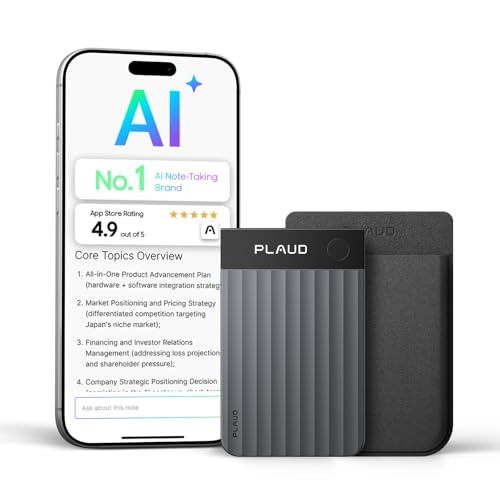
Plaud
Plaud Note Pro AI Voice Recorder Transcribe & Summarize for Meetings Calls

RECOLX LOOP
Recolx Tap AI Recorder with Transcription Summaries, 64GB Audio Recorder

ocxu
AI Voice Recorder, AI Transcription & Summary, APP Control AI Note Taking Device Supports 132+ Languages, 100H 64GB Memory, Magnetic Audio Recorder for Lectures, Learning, Meetings, Calls, Black

EVISTR
EVISTR Digital Voice Recorder 128GB AI Transcribe & Summarize Note Taker
Prices retrieved from Amazon on 2026-09-29 and may since have changed; the price on Amazon at the time of purchase is the one that applies. As an Amazon Associate we earn from qualifying purchases, at no extra cost to you. No manufacturer pays for a place in this list.
Conference speakerphones
Affiliate linksBetter audio makes transcription far more accurate than a laptop microphone at the end of a table.

EMEET
EMEET M0 Plus Conference Speaker and Microphone, 4 Mics 360° Voice Pickup

Yealink
Yealink Sp92 Conference Speaker and Microphone Teams Certified Mic with Al Noise Cancelling 20H Call Time USB Speakerphone for Small Meeting Room, Bluetooth Speaker for Computer/Laptop

AIRHUG
AIRHUG Conference Speaker and Microphone, Bluetooth & USB Speakerphone

EMEET
EMEET Luna Conference Speaker and Microphone, 360° Voice Pickup for 8 Users
Prices retrieved from Amazon on 2026-09-29 and may since have changed; the price on Amazon at the time of purchase is the one that applies. As an Amazon Associate we earn from qualifying purchases, at no extra cost to you. No manufacturer pays for a place in this list.