Diode, CO2 or fiber
The laser's wavelength decides which materials absorb it. No one type does everything, and many shops end up with a CO2 machine for organics and acrylic plus a fiber marker for metal.
| Type | Wavelength | Good for | Notes |
|---|---|---|---|
| Diode | Visible blue light, around 450 nm | Wood, leather, card, dark acrylic, coated metal. Cuts thin wood slowly. | Cheapest; often open-frame |
| CO2 | Infrared, 10.6 µm | Wood, acrylic (including clear), leather, fabric, paper, glass and stone engraving. Cuts well. | Usually enclosed; glass tube is a wear part |
| Fiber | Infrared, around 1,064 nm | Marks and engraves bare metal and many plastics. Not for cutting wood or clear acrylic. | Galvo head; fast marking of small areas |
Power ratings are not comparable across types. A diode rating may describe electrical input or optical output, so check which. Compare optical output within the same laser type, and ask for sample cuts in your own material.
Laser classes and what the FDA requires
In the US, laser products are regulated by the FDA's Center for Devices and Radiological Health (CDRH) under the performance standard at 21 CFR 1040.10 and 1040.11. Manufacturers must certify their products, label the class, and file reports with CDRH. The FDA uses Roman numerals (I to IV) and also accepts classification under the international standard IEC 60825-1. That standard uses 1, 1M, 2, 2M, 3R, 3B and 4.
| Class | What it means |
|---|---|
| Class 1 / I | Safe under normal use. Most enclosed machines with interlocks are Class 1 as a product even with a powerful laser inside. |
| Class 2 / II | Low-power visible beam; the blink reflex gives protection. Typical of aiming and alignment lasers. |
| Class 3R / IIIa | Low risk, but staring into the beam is hazardous. |
| Class 3B / IIIb | Direct beam and mirror-like reflections are an eye hazard. |
| Class 4 / IV | Direct and diffuse reflections can injure eyes and skin, and the beam is a fire hazard. Open-frame engravers are usually here. |
The class applies to the product as sold, not the laser source. A fully enclosed CO2 cabinet with a lid interlock and a viewing window that blocks the wavelength can be Class 1. The same tube in an open frame is Class 4. That difference decides whether a machine can sit in a shared room or needs a controlled area.
Look for the class label and certification statement on the machine. An imported engraver with no class label is a warning sign. OSHA has no laser-specific standard for general industry; it points employers to the ANSI Z136.1 standard on safe use of lasers, and to its general duty to protect workers.
Fume extraction
A laser engraves by burning or vaporizing material, so every job makes smoke, particles and gases. What is in them depends on the material. Two ways to handle it:
- Duct to outside. An inline fan and a duct through a window or wall. The most effective option and usually the cheapest, if the building allows it and nobody is downwind.
- Filtered fume extractor. A unit with a pre-filter, a HEPA filter for fine particles and activated carbon for gases and odor. Needed where venting outside is impossible. Filters are a running cost and carbon saturates, so budget for replacements.
Either way, the extraction should run whenever the laser does. An air-assist pump, blowing air at the cutting point, reduces flare-ups and charring; it is separate from extraction and does not replace it.
Materials never to laser
- PVC and vinyl (including many faux leathers and some signage plastics): they release chlorine compounds that harm people and corrode the machine.
- Polycarbonate cuts poorly and discolors; ABS melts and gives off unpleasant fumes. Check each plastic before you run it.
- Anything you cannot identify. Ask the supplier for a safety data sheet, or do not cut it.
Costs people miss
- Extraction: a fan and ducting, or a filtered extractor and its filters.
- CO2 glass tubes lose power with use and need replacement; RF metal tubes last longer and cost more.
- Lenses and mirrors get dirty and need cleaning or replacement.
- A rotary attachment for tumblers and cylinders, and a honeycomb or slat bed.
- Chiller or water cooling for larger CO2 machines.
- Software licenses; some machines ship with basic software and sell the capable version separately.
Before you buy
- List your materials, then pick diode, CO2 or fiber to match them.
- Prefer an enclosed, interlocked Class 1 machine for any shared or public space.
- Confirm the class label and FDA certification statement are on the product.
- Plan the exhaust route or buy a filtered extractor before the machine arrives.
- Buy wavelength-matched safety glasses for any open-frame machine.
- Check the bed size and pass-through against your largest workpiece.
- Write down the banned-materials list and post it by the machine.
Many of the same ventilation questions come up with 3D printers. For printed labels and asset tags without a laser, see label makers.
Enclosed laser engravers
Affiliate linksEnclosed machines with lid interlocks can be Class 1 products, safer for shared spaces. Check the class label.
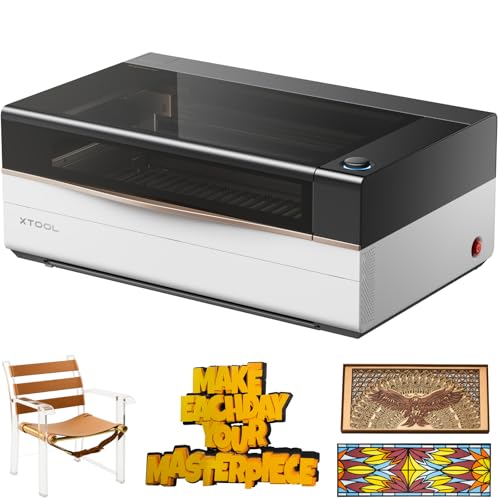
xTool
xTool P3 80W Flagship CO2 Laser Cutter with Intelligent Automation

OMTech
OMTech K40+ 45W Desktop CO2 Laser Engraver & Cutter

VEVOR
VEVOR 50W CO2 Laser Engraver, 20 x 12 in, CO2 Laser Engraver Cutter Machine with 4 Way Pass Air Assist, Engraving Cutting Machine, Compatible with LightBurn CorelDRAW RDWorks, for Wood Acrylic Glass

xTool
xTool M2 10W Laser Engraver, Built-in Dual Cameras, Class 1 Enclosed Safe Laser Engraving Machine for DIY Craft on Wood, Leather, Felt, Fabric, Paper
Prices retrieved from Amazon on 2026-09-29 and may since have changed; the price on Amazon at the time of purchase is the one that applies. As an Amazon Associate we earn from qualifying purchases, at no extra cost to you. No manufacturer pays for a place in this list.
Laser fume extractors
Affiliate linksFiltered extractors with HEPA and activated carbon, for where venting outdoors is not possible.

Creality
Creality Falcon AP1 Smart Smoke Purifier, 360° Full-circle Purification, 99% Purification Rate, Real-Time PM2.5 Monitoring, WiFi/App Control, 150W IOT-Connected Fume Extractor for Most Laser Engraver

NEETOP
NT-X1 Laser Fume Extractor Diode/Fiber Laser with H13 HEPA Carbon Filter

NEETOP
Laser Fume Extractor with≤60W Laser, Multi H13 HEPA, High-Iodine Carbon

BlazeX
BlazeX Air Purifier for M3 & M2 Pro Laser Engraver, 3-Stage Filtration Fume Extractor with HEPA & Active Carbon Filter, High-Efficiency Dust & Odor Removal for Indoor Laser Cutting and Engraving
Prices retrieved from Amazon on 2026-09-29 and may since have changed; the price on Amazon at the time of purchase is the one that applies. As an Amazon Associate we earn from qualifying purchases, at no extra cost to you. No manufacturer pays for a place in this list.
Laser safety glasses
Affiliate linksGlasses are rated for a wavelength range and optical density. Buy the pair rated for your laser.

CARLANY
190nm-490nm OD 6+ Laser Safety Eye Protection Glasses UV Violet & Blue

LP-LaserPair
LaserPair Laser Safety Glasses 200-534nm and 740-1095nm Laser Goggles
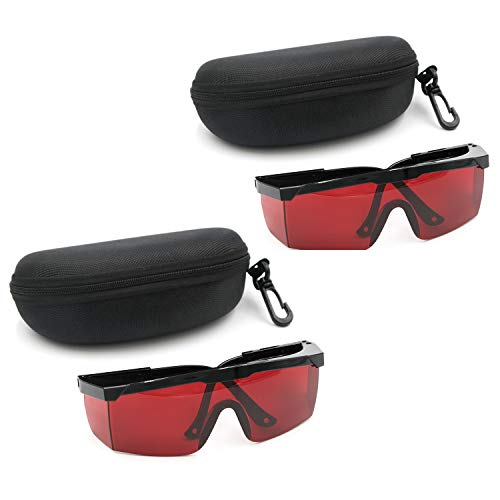
GOSONO
GOSONO 2 SET Goggles Laser Safety Glasses 190nm to 540nm Laser protective eyewear With Velvet Box (2pcs Red)

CARLANY
CARLANY CO2 Laser Safety Glasses OD 5+ 9000-11000nm / 10600nm Eye Protection Goggles
Prices retrieved from Amazon on 2026-09-29 and may since have changed; the price on Amazon at the time of purchase is the one that applies. As an Amazon Associate we earn from qualifying purchases, at no extra cost to you. No manufacturer pays for a place in this list.