Four types
| Type | Suits | Strength | Limit |
|---|---|---|---|
| Compact / micro scrubber | Small shops, restrooms, break areas, cluttered spaces | Very maneuverable, cheap to buy | Small tanks, slow over large areas |
| Walk-behind | Retail floors, offices, schools, small warehouses | Wider path, larger tanks, still fits aisles | Operator walks the whole floor |
| Ride-on | Warehouses, factories, large retail and airports | Covers large areas fast, less fatigue | Cost, size, needs trained operators and storage |
| Robotic | Large, open, repetitive routes cleaned daily | Runs without an operator on mapped routes | Cost, setup, needs clear floors and human spot cleaning |
Dealers size machines by area cleaned per hour. The figure published is a theoretical maximum: cleaning width times walking speed with no stops. Real productivity is much lower once you allow for turns, obstacles, emptying and refilling. Ask for a practical rate, or halve the brochure figure to be safe.
Robotic scrubbers
Robotic scrubbers learn a route, then clean it on a schedule with no one driving. They suit large, open, regular floors such as warehouses, big-box stores, airports and hospital corridors, especially where the same route runs every night. They are expensive to buy, so many are offered on subscription. They still need a person to fill and empty tanks (unless docked), clear obstacles, and clean edges and corners. See cleaning robots for the wider picture and robots as a service for how subscriptions work.
The specifications that matter
- Cleaning path width. Wider is faster, but it must fit your narrowest aisle and doorway with room to turn.
- Solution and recovery tanks. Larger tanks mean fewer trips to refill and empty. The recovery tank should be a little larger than the solution tank to allow for foam.
- Brush type. Disk brushes are the common choice and scrub well on smooth floors. Cylindrical brushes sweep up small debris as they scrub and handle grout and textured floors better. Orbital heads can strip finish without chemicals and use less water.
- Down pressure. Adjustable pressure lets one machine do light daily cleaning and heavier scrubbing.
- Batteries. Flooded lead-acid batteries are cheapest but need regular watering and a ventilated charging area. Sealed AGM or gel batteries need no watering. Lithium-ion batteries cost more but charge faster, last longer and need no watering. Check run time per charge against your cleaning shift.
- Cord or battery. Small corded scrubbers exist for small spaces; batteries are the norm for anything larger.
- Chemical dosing. Built-in metering stops operators overdosing chemicals, a common cause of sticky floors and wasted money.
- Noise. Matters if cleaning happens while people work.
Scrubber or sweeper
A scrubber cleans with water and brushes; a sweeper picks up dry debris, dust and litter. Warehouses and factories with loose debris often need both, or a combination sweeper-scrubber, because a scrubber pushed over heavy debris clogs its squeegee and leaves streaks. Offices and shops with little loose dirt usually need only a scrubber, with a quick dust mop first.
Safety and training
- Wet floors are a slip hazard. Put out warning signs and clean when traffic is low. A good squeegee leaves the floor nearly dry.
- Train operators on the machine, the chemicals and the charging area. Keep safety data sheets for cleaning chemicals available, as OSHA's hazard communication standard requires.
- Ride-on machines are heavy vehicles. Set speed limits and routes around people.
- Lead-acid batteries release hydrogen when charging; charge in a ventilated area away from sparks.
The costs people miss
- Brushes, pads and squeegee blades wear out and need regular replacement.
- Replacement batteries, a large cost on lead-acid machines after a few years.
- Chemicals, used in the right dilution.
- Preventive maintenance: a dealer service plan or trained in-house staff.
- Storage space and a charging point with drainage nearby for emptying tanks.
See also air purifiers and robot safety.
Before you buy
- Measure the floor area and the narrowest aisle and door.
- Note floor types: sealed concrete, vinyl, tile and grout, or textured.
- Estimate real cleaning time per night at a practical rate.
- Choose battery type against run time and upkeep.
- Ask for a demo on your own floor.
- Compare buying, leasing, renting and robotic subscriptions over three to five years.
- Plan training, signage and the charging area.
Compact floor scrubbers
Affiliate linksCompact auto scrubbers for smaller floors, restrooms and break areas. Larger walk-behind and ride-on machines are usually bought through a janitorial dealer.

KARHDIR
15" Walk-Behind Commercial Floor Scrubber Machine | 24,000 Sqft/h Coverage

Global Industrial
Global Industrial Commercial Electric Walk-Behind Ergonomic Auto Floor Scrubber, Corded, 17" Cleaning Path, 9.2 Gallon Solution Tank, 10.5 Gallon Recovery Tank

Global Industrial
Global Industrial Commercial & Industrial Auto Walk-Behind Floor Scrubber, 20" Cleaning Path, Battery Powered, 15 Gallon Solution Tank, 17 Gallon Recovery Tank
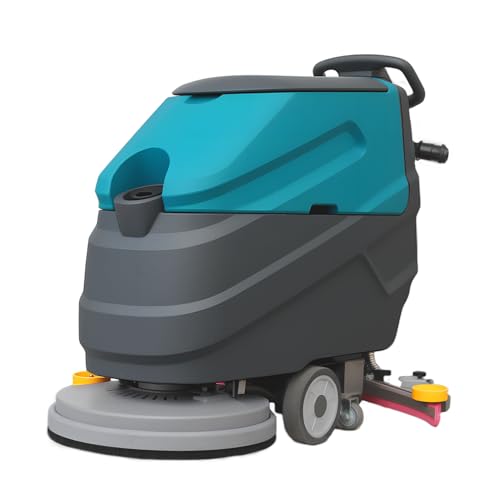
KARHDIR
KARHDIR Walk-behind Floor Scrubber Machine, 22" Cleaning Width
Prices retrieved from Amazon on 2026-09-29 and may since have changed; the price on Amazon at the time of purchase is the one that applies. As an Amazon Associate we earn from qualifying purchases, at no extra cost to you. No manufacturer pays for a place in this list.