Why humidity matters to equipment and paper
Paper absorbs moisture, curls and jams in printers and copiers. Stored records and cardboard mildew. Metal corrodes and electronics suffer from condensation. The EPA recommends keeping indoor relative humidity below 60%, and ideally between 30% and 50%, to limit mold growth. Printer and copier makers publish their own operating humidity ranges, usually in the manual.
A cheap hygrometer tells you where you stand. Measure for a week, in the season when damp is worst, before you buy.
Pint ratings changed in 2019
Capacity is rated in pints of water removed per day. In 2019 the Department of Energy's test procedure moved to cooler, more realistic conditions (65°F rather than 80°F). The same machine now carries a lower number: a unit once sold as "70 pint" is often rated around 50 pints under the new test. When comparing models, make sure both ratings are on the current DOE basis, and be wary of old listings.
Sizing
Size depends on floor area, how damp the space is, and how much outside air, water or people it has. As a rough guide on current ratings:
- A moderately damp room up to about 1,000 sq ft: around 20 to 35 pints.
- A damp basement or storeroom of 1,000 to 2,000 sq ft: around 35 to 50 pints.
- Very wet spaces, larger areas, or anywhere a residential unit runs constantly: a commercial unit.
A slightly oversized unit reaches the target and cycles off. An undersized one runs all the time and never gets there.
Residential-style or commercial
Portable residential-style units suit rooms and small basements. They are widely sold and inexpensive. Most struggle below about 65°F, when their coils frost up; check the minimum operating temperature and look for auto-defrost if the space is cool.
Commercial and low-grain refrigerant (LGR) units remove more water, work at lower temperatures and humidity, and are built to run continuously. They are the choice for warehouses, crawlspaces, water damage drying and archive rooms. Desiccant dehumidifiers work well in cold spaces where refrigerant units lose efficiency.
Drainage
- Bucket. Needs emptying, sometimes more than once a day. Unit shuts off when full. Fine for a small room with someone around.
- Gravity drain. A hose to a floor drain or sink below the unit. The simplest hands-off option.
- Condensate pump. Built-in or add-on; pushes water up and out to a sink or drain above the unit. Needed in a basement without a floor drain.
Placement
Put the unit near the center of the damp area with clear space around its intake and exhaust, and close doors and windows to the rest of the building so it dries the space you care about, not the whole floor. In a large storeroom, two smaller units at opposite ends often do better than one large one. Keep boxes and records off the floor and away from outside walls while the space dries out.
Server closets
Small server and network closets are more often too hot than too humid. Cooling and ventilation come first. If humidity is a problem too, a dehumidifier adds heat to the room; plan the cooling to cope with it. See the server guide and UPS sizing for the rest of the closet.
The specifications that matter
- Capacity in pints per day, on the 2019 DOE basis.
- Energy efficiency. ENERGY STAR certifies dehumidifiers on integrated energy factor, in liters of water removed per kilowatt-hour. A unit that runs most of the year pays back efficiency quickly.
- Operating temperature range and auto-defrost, for cool spaces.
- Humidistat. Set a target and let the unit cycle. Check it restarts at the same setting after a power cut.
- Drain options and a built-in pump if you need one.
- Filter. A washable air filter protects the coils; clean it regularly.
The costs people miss
- Electricity. A unit running most of the day draws steady power month after month.
- A condensate pump, and its replacement when it wears out.
- The heat the unit adds to the room.
- Downtime. Residential units are rarely repairable; commercial units usually are.
For air quality, see air purifiers.
Before you buy
- Measure humidity for a week in the worst season.
- Measure floor area and note the lowest room temperature.
- Choose capacity on current DOE ratings.
- Plan drainage: floor drain, sink or pump.
- Check ENERGY STAR status and the operating temperature range.
- Fix leaks and sources of damp where you can.
Dehumidifiers with built-in pump
Affiliate linksDehumidifiers with a built-in condensate pump, for basements and storerooms with no floor drain.

Midea
Midea 50 Pint Dehumidifier with Pump, 4,500 Sq. Ft, Energy star

DuraComfort
DuraComfort 119 Pints Max Dehumidifier with Built-in Pump, 50 Pint DOE for Basement & Home, 16.4 Ft Pump Drain, 3 Drainage Options, Auto Defrost & 24H Timer

DuraComfort
DuraComfort 129 Pints Max Dehumidifier with Pump & WiFi, 50 Pint DOE Dehumidifier for Basement, 16.4 Ft Pump Drain, Smart App Control, 3 Drainage Options, Auto Defrost & 24H Timer

avylo
avylo Dehumidifier for Basement with Pump and Hose, Max 90 Pints/D, White
Prices retrieved from Amazon on 2026-09-29 and may since have changed; the price on Amazon at the time of purchase is the one that applies. As an Amazon Associate we earn from qualifying purchases, at no extra cost to you. No manufacturer pays for a place in this list.
Commercial dehumidifiers
Affiliate linksCommercial and low-grain refrigerant (LGR) dehumidifiers built to run continuously in cool, damp spaces.
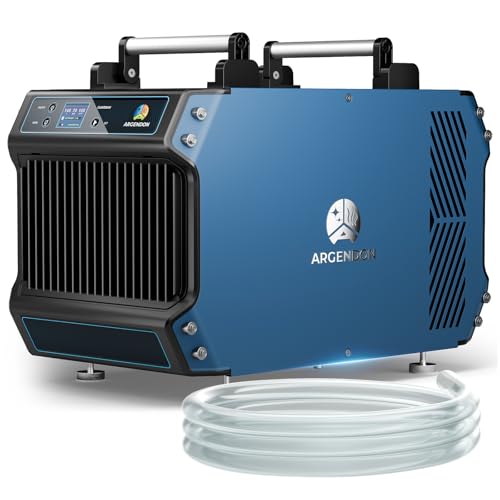
ARGENDON
ARGENDON 180 Pints Crawlspace Dehumidifiers with Pump for Commercial, ETL

ALORAIR
ALORAIR 180 PPD Commercial Dehumidifier with Pump, 6-Year Limited Warranty

Moiswell
190 Pints LGR Commercial Dehumidifier with Pump, Stackable Industrial
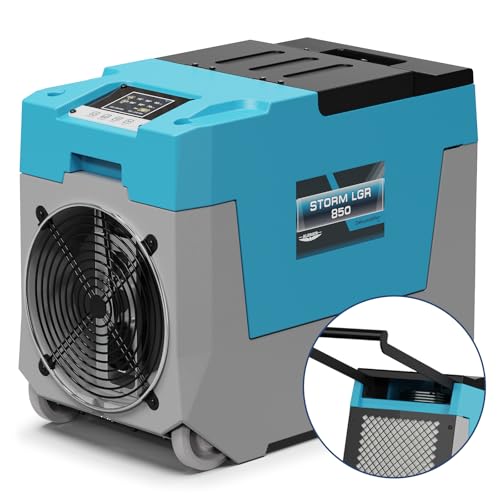
ALORAIR
AlorAir 180 PPD LGR Commercial Dehumidifier with Pump, Heavy Duty Industrial Dehumidifiers Water Damage Restoration for Homes, Basements, Garages, Gym and Job Sites, Winter Storm (Blue)
Prices retrieved from Amazon on 2026-09-29 and may since have changed; the price on Amazon at the time of purchase is the one that applies. As an Amazon Associate we earn from qualifying purchases, at no extra cost to you. No manufacturer pays for a place in this list.